Worksheet on Birds and its Feeding Habits
Worksheet on birds and its feeding habits contains various types of questions on food and feeding habits as well as movements of birds. We know the beaks and claws help the birds in their feeding habits.
Read the concept to answer the questions on birds and its feeding habits.
I. Fill in the blanks:
(i) The claws of a _______ bird help it to hold a branch firmly.
(ii) The parrot has a strong _______ beak.
(iii) The _______ feet of a duck help it to swim in water.
(iv) The _______ bird sucks nectar from flowers.
II. Answer the
following questions:
(i) How does the duck make use of its beak?
(ii) What does the eagle use its claw for?
(iii) What does the woodpecker use its beak for?
III. Underline the correct answer:
(i) The sparrow/hoopoe has a short and pointed beak.
(ii) Scratching/Climbing birds have two toes in the front and two at the back.
(iii) The stork/woodpecker has a long, pointed beak.
Check the answers of worksheet on birds and its feeding habits:
Answers:
I. (i) perching
(ii) curved
(iii) webbed
(iv) humming
II. (i) Duck use its broad and flat beak with small holes on it. It takes in muddy water with insects, worms and tiny plants. The mud and water come out through the side holes of the beak, but little plants and insects remain inside the beak and then the duck eats them.
(ii) Eagle uses its claws to catch and hold their prey tightly with their claws.
(iii) Woodpecker uses its beak to tap the bark of a tree and to make a hole in the bark so that it can pull out insects from that hole to eat them.
III. (i) sparrow
(ii) Climbing
(iii) stork
• Birds: Feeding habits, Nesting and Hatching
Worksheet on Birds and its Food Habits
Worksheet on Birds and its Feeding Habits
Worksheet on Nesting and Hatching of Birds
From Worksheet on Birds and its Feeding Habits to HOME PAGE


Recent Articles


-
Plants Around Us | Big & Small Plants | Shrubs & Herbs | Water Plants
Feb 03, 26 02:01 AM
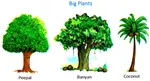 We see different types of plants around us. Plants are living things. They breathe and grow. They also reproduce. Most of the plants grow on land. Some plants grow in water.
 -
Formed Elements of Blood | Erythrocytes | ESR |Leukocytes |Neutrophils
Jan 15, 26 01:25 AM
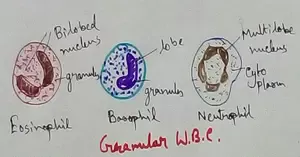 Formed elements formed elements are constitute about 45 % of blood afeias haematocrit value packed cell volume mostly of red blood corpuscles and are of 3 types- erythrocytes, leukocytes and blood pla…
 -
What Is Plasma? | Blood Plasma | Proteins | Nutrients | Cholesterol
Nov 07, 25 10:29 AM
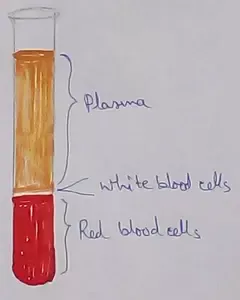 Blood is a mobile fluid which is a connective tissue and is derived from the mesoderm like cell any other connective tissue. Colour of blood is reddish and that flows inside the blood vessels by means…
 -
Disorders of Respiratory System | Tuberculosis | Pleurisy | Emphysema
Oct 28, 25 11:39 PM
Tuberculosis is very common disease and is caused by a type of bacteria called Mycobacterium tuberculosis. This disease causes different trouble in the respiration and infection of several parts of th… -
Regulation of Respiration | Respiratory Centres | Inspiratory Area |
Oct 14, 25 12:13 AM
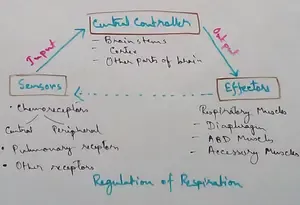 Respiratory Centre is the area that controls the rate of respiration and it is observed to be located in medulla oblongata and pons. Respiratory Centre has the following will dispersed components like…
New! Comments
Have your say about what you just read! Leave me a comment in the box below.