Secondary Growth of Cork Cambium
Root - Cork cambium or phellogen is formed from pericycle. It produces phellogen or cork on the outside and secondary cortex or phellogen on the inner side. This three together called periderm. Cortex and epiblema peel off. Cork or phloem is made of dead cells and lenticels are observed in different places.
Stem – Phellogen or cork cambium develops secondarily from the outer layer of cortex. Cells of phellogen divide outside as well as inside to form respectively cork or phellem and secondary cortex or phelloderm. Cork, cork cambium, secondary cortex are together called periderm.
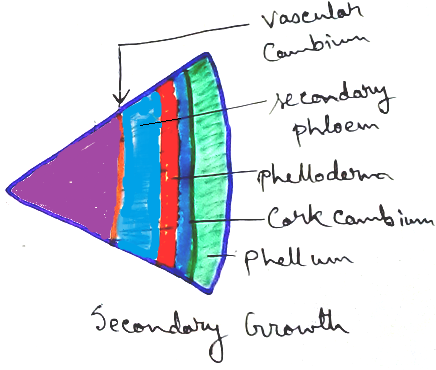
Secondary cortex has radial arrangement of cells. Cork or phellem is made up of dead suberised and rectangular cells which are filled with air and tannins. Cork is protective. Bark is technically cork of dead cells outside phellogen and in non technical usage it means all tissues outside vascular cambium. The outer dead part of the bark is called rhytidome and inner part of the bark is living and made up of phellogen, secondary cortex and phloem. Outer part of the bark is peeled off either in sheets ( Eucalyptus), irregular strips (guava), sheet bark (Bhojpatra), bark of cinchona gives quinine and cinnamon provides spices.
From Secondary Growth of Cork Cambium to HOME PAGE


Recent Articles


-
Plants Around Us | Big & Small Plants | Shrubs & Herbs | Water Plants
Feb 03, 26 02:01 AM
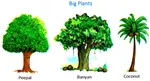 We see different types of plants around us. Plants are living things. They breathe and grow. They also reproduce. Most of the plants grow on land. Some plants grow in water.
 -
Formed Elements of Blood | Erythrocytes | ESR |Leukocytes |Neutrophils
Jan 15, 26 01:25 AM
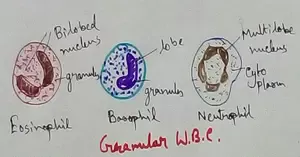 Formed elements formed elements are constitute about 45 % of blood afeias haematocrit value packed cell volume mostly of red blood corpuscles and are of 3 types- erythrocytes, leukocytes and blood pla…
 -
What Is Plasma? | Blood Plasma | Proteins | Nutrients | Cholesterol
Nov 07, 25 10:29 AM
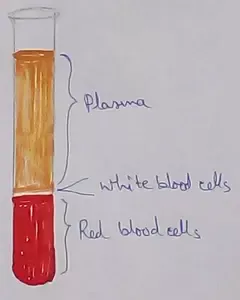 Blood is a mobile fluid which is a connective tissue and is derived from the mesoderm like cell any other connective tissue. Colour of blood is reddish and that flows inside the blood vessels by means…
 -
Disorders of Respiratory System | Tuberculosis | Pleurisy | Emphysema
Oct 28, 25 11:39 PM
Tuberculosis is very common disease and is caused by a type of bacteria called Mycobacterium tuberculosis. This disease causes different trouble in the respiration and infection of several parts of th… -
Regulation of Respiration | Respiratory Centres | Inspiratory Area |
Oct 14, 25 12:13 AM
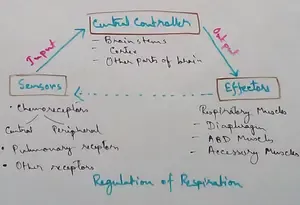 Respiratory Centre is the area that controls the rate of respiration and it is observed to be located in medulla oblongata and pons. Respiratory Centre has the following will dispersed components like…
New! Comments
Have your say about what you just read! Leave me a comment in the box below.