Verbs of Complete Predication
Ever wondered how an Intransitive Verb, though it does not take an object, yet is able to convey complete sense and meaning?
For Example:
- She sings.
- The kangaroos jump.
- The river flows.
Here the Intransitive verb ‘sings’, ‘jump’ and ‘flows’ express complete meaning and hence known as Verbs of complete predication.
1. Verbs are the Predicators, predicate markers.
When a verb and subject together can make complete sense without requiring an Object, the verb is of complete predication, if not it is a Verb of incomplete predication.
Examples:
· She sings. (Intransitive)
She sings a song. (Transitive)
· God is …… (Incomplete)
God is loving. (Transitive)
The first verb ‘sings’ is an example of Verb of complete Predication while the second verb ‘be’ is an example of Verb of Incomplete Predication.
2. The difference between the two then lies on the perception whether the verb in question requires complementation or not. The sense of completion is essential to our realization and primary consideration of a verb, be it transitive or intransitive sentence structure.
3. Verbs of Complete predication are Predicative. They are verbs in a Personal Mood and together with the Subject in an Intransitive context can form complete sentences.
4. When used in a Transitive context, they form complete sentences with a Direct Object.
For Example:
Intransitive: The child eats.
Transitive: The child eats a banana.
5. Verbs of complete Predication are hence capable of acting as a predicate without any additional word or phrase.
Examples:
- Fishes swim.
- Birds fly.
- The sun shines.
- The moon rises.
- The man smiled.
- The girl danced.
- The lions roared.
- The clock ticked.
Which kind of verbs usually fall in this category?
1. Subjective Verbs (always Transitive): to act, to sleep, to glisten.
2. Objective Verbs (Only Transitive): to give, to take, to envy.
3. Terminative Verbs (Expressing actions having ultimate aims): to close, to open, to find.
4. Durative Verbs (Expressing actions with no final aim or purpose) : to like, to love, to hope, to aim
5. Reflexive Verbs (Formed with said of Reflexive Pronouns): to wash oneself, to shave himself.
6. Mixed type Verbs (Which can be both Terminative and Durative Verbs) to stand, to know, to remember.
As opposed to this there is the example:
The boy seemed…
The cat is….
Both the above underlined verbs are Verbs of Incomplete Predication, simply because they require further words or phrases to lend the sentence completion.
For Example: The boy seemed lost.
The cat is fidgety.
The common words of Incomplete Predication are be (is,am,are, were, was), seem, appear, look, become, feel and grow.
Examples:
- The day grew longer.
- She looked sensible.
- Alex is an ophthalmologist.
- Flies appear everywhere.
- He became a philanthropist.
- I feel energetic.
The words thus fitted in to render the sentences complete are known as Complement in a sentence. Since, in cases of Intransitive Verbs, the complement always mentions an extra detail about the Subject, they are also known as Subject Complement
The Complement of a verb of Incomplete Predication can be a Noun, Adjective, Pronoun, Present Participle, a to-infinitive and an Adverb.
Examples:
- We are upset. (adjective)
- Mary is a professor. (Noun)
- The dog bit her. (Pronoun)
Even phrases and clauses may be the complements of the Verb of Incomplete Predication.
Examples:
· I think that you told the truth. (clause)
· He seems to have recovered. (phrase)
English Grammar and Composition
From Verbs of Complete Predication to HOME PAGE


Recent Articles


-
Plants Around Us | Big & Small Plants | Shrubs & Herbs | Water Plants
Feb 03, 26 02:01 AM
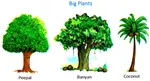 We see different types of plants around us. Plants are living things. They breathe and grow. They also reproduce. Most of the plants grow on land. Some plants grow in water.
 -
Formed Elements of Blood | Erythrocytes | ESR |Leukocytes |Neutrophils
Jan 15, 26 01:25 AM
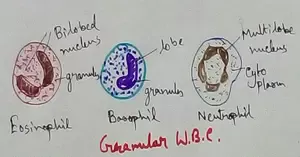 Formed elements formed elements are constitute about 45 % of blood afeias haematocrit value packed cell volume mostly of red blood corpuscles and are of 3 types- erythrocytes, leukocytes and blood pla…
 -
What Is Plasma? | Blood Plasma | Proteins | Nutrients | Cholesterol
Nov 07, 25 10:29 AM
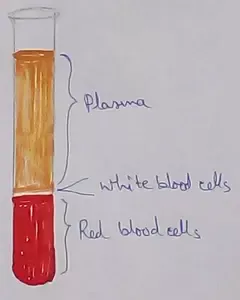 Blood is a mobile fluid which is a connective tissue and is derived from the mesoderm like cell any other connective tissue. Colour of blood is reddish and that flows inside the blood vessels by means…
 -
Disorders of Respiratory System | Tuberculosis | Pleurisy | Emphysema
Oct 28, 25 11:39 PM
Tuberculosis is very common disease and is caused by a type of bacteria called Mycobacterium tuberculosis. This disease causes different trouble in the respiration and infection of several parts of th… -
Regulation of Respiration | Respiratory Centres | Inspiratory Area |
Oct 14, 25 12:13 AM
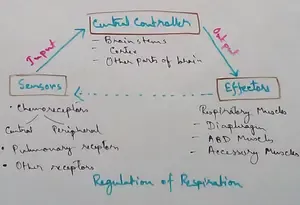 Respiratory Centre is the area that controls the rate of respiration and it is observed to be located in medulla oblongata and pons. Respiratory Centre has the following will dispersed components like…
New! Comments
Have your say about what you just read! Leave me a comment in the box below.