Morphology of a Butterfly
A butterfly has three major body parts—head, thorax and abdomen.
(i) Head: The head of a butterfly is spherical in shape. It bears two compound eyes placed at two sides of the head. Each eye consists of a number of separate light-sensitive components, called ommatidia. In front of the head there is a pair of thin and long antennae, which help in smelling. Butterfly has a fine tube-like feeding apparatus, called proboscis, which is used as a straw to suck sweet nectar from flowers. While not in use, the proboscis is rolled up like a spring. Two lateral lip- like structures cover it from two sides.
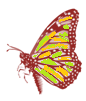
(ii) Thorax: Thorax has three segments. At its dorsal side a pair of wings are attached. The wings are made up of thin skin folds. Wings are covered with numerous and very fine scales. The color, texture and arrangement of these scales make the beautiful wing patterns of butterflies.
A
butterfly has three pairs of multi-jointed legs. Each thoracic segment bears a
single pair of it.
(iii) Abdomen: Abdomen is longer than the thorax. It has ten segments. Both thorax and abdomen are covered with numerous soft and minute bristles. At both sides of each body segment there are two minute openings. These are known as spiracles. These openings act as breathing pores.
From Morphology of a Butterfly to HOME PAGE


Recent Articles


-
Plants Around Us | Big & Small Plants | Shrubs & Herbs | Water Plants
Feb 03, 26 02:01 AM
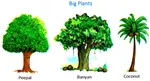 We see different types of plants around us. Plants are living things. They breathe and grow. They also reproduce. Most of the plants grow on land. Some plants grow in water.
 -
Formed Elements of Blood | Erythrocytes | ESR |Leukocytes |Neutrophils
Jan 15, 26 01:25 AM
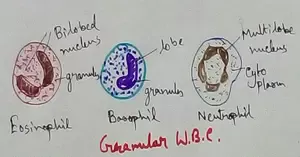 Formed elements formed elements are constitute about 45 % of blood afeias haematocrit value packed cell volume mostly of red blood corpuscles and are of 3 types- erythrocytes, leukocytes and blood pla…
 -
What Is Plasma? | Blood Plasma | Proteins | Nutrients | Cholesterol
Nov 07, 25 10:29 AM
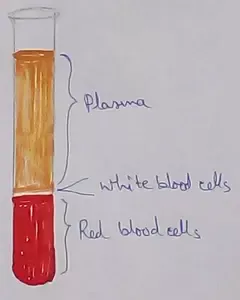 Blood is a mobile fluid which is a connective tissue and is derived from the mesoderm like cell any other connective tissue. Colour of blood is reddish and that flows inside the blood vessels by means…
 -
Disorders of Respiratory System | Tuberculosis | Pleurisy | Emphysema
Oct 28, 25 11:39 PM
Tuberculosis is very common disease and is caused by a type of bacteria called Mycobacterium tuberculosis. This disease causes different trouble in the respiration and infection of several parts of th… -
Regulation of Respiration | Respiratory Centres | Inspiratory Area |
Oct 14, 25 12:13 AM
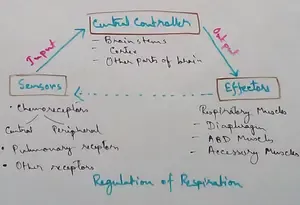 Respiratory Centre is the area that controls the rate of respiration and it is observed to be located in medulla oblongata and pons. Respiratory Centre has the following will dispersed components like…
New! Comments
Have your say about what you just read! Leave me a comment in the box below.